

Getting Found Online
Local SEO, Explained Without the Jargon
No acronyms, no dashboards. Just what "getting found" actually means for a business with a street address.
5 min readBy Mavlo
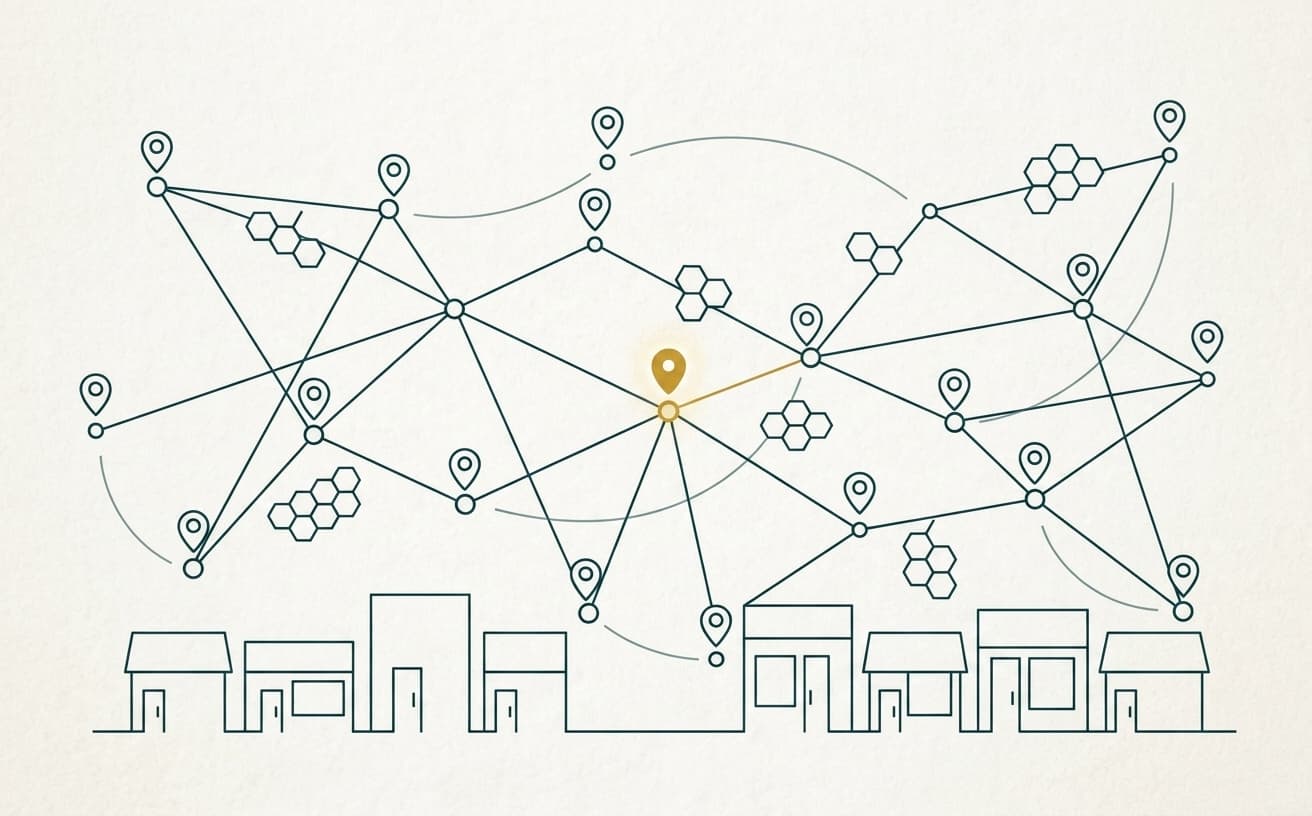
Local SEO is not a discipline you need a course for. It is one plain idea: when someone nearby searches for what you do, you want to be the answer they get. That’s the whole job.
The confusing part is that "the answer" no longer comes from one place. It used to be a page of ten blue links. Now it’s a map with three pins, a knowledge panel, and increasingly, a sentence an AI assistant says out loud. Different surfaces, same underlying question: who does Google (or ChatGPT, or Maps) trust enough to recommend?
It’s trust, not tricks
Search engines are trying to solve the same problem a local resident solves when a visitor asks "where’s good round here?" They lean on the sources that have been reliably right before. A business with a consistent name and address across the web, real photos, real hours, and a few honest reviews reads as *real* to a search engine the same way it reads as real to a person.
A business with a half-filled profile, an address that doesn’t quite match its website, and no photos reads as *unverified*. Not necessarily bad, just unproven. Search engines default to caution with unproven listings. That caution is most of what "bad local SEO" actually looks like from the outside.
The one-sentence version
Local SEO is the process of making it obvious, to a machine reading signals and to a person skimming a result, that your business is real, current, and exactly where you say it is.
What actually moves it
- Consistency: your name, address and phone number match, everywhere, exactly. See why that one detail breaks more than people expect.
- Completeness: hours, category, description, photos. Gaps read as neglect.
- Structured data: machine-readable facts about your business, not just a page a human can read. More on that in Machines Don’t Read Your Website.
- A handful of real, varied backlinks: other reputable local sites pointing to you. Explained in One Strong Link Beats a Hundred Weak Ones.
- Reviews that keep coming: not a pile from three years ago.
Notice what’s missing: keyword stuffing, backlink farms, any of the tricks that used to define "SEO." That version of the game is mostly over. What replaced it is closer to reputation management than marketing.
Where a directory listing fits into this
A well-run local directory does the unglamorous plumbing for you: consistent structured data, a stable canonical page, a category taxonomy search engines already trust, so you’re not building this from a blank website. Read what that looks like in practice in Your Google Business Profile Isn’t a Listing. It’s a Rental.
Key takeaways
- Local SEO means proving your business is real, current and exactly where you say it is, to machines and people alike.
- Consistency and completeness beat clever tactics. Every time.
- A directory listing is a fast, credible way to get the structured basics right.
Put your business on the map
A free listing takes two minutes and puts you inside the network this article just described.
Claim your free listing →