

How AI Search Changed Everything
To a Machine, Are You One Business or Three?
Search engines and AI assistants keep one record per business. If your name is written three ways online, they may be keeping three thin records instead of one good one.
7 min readBy Mavlo
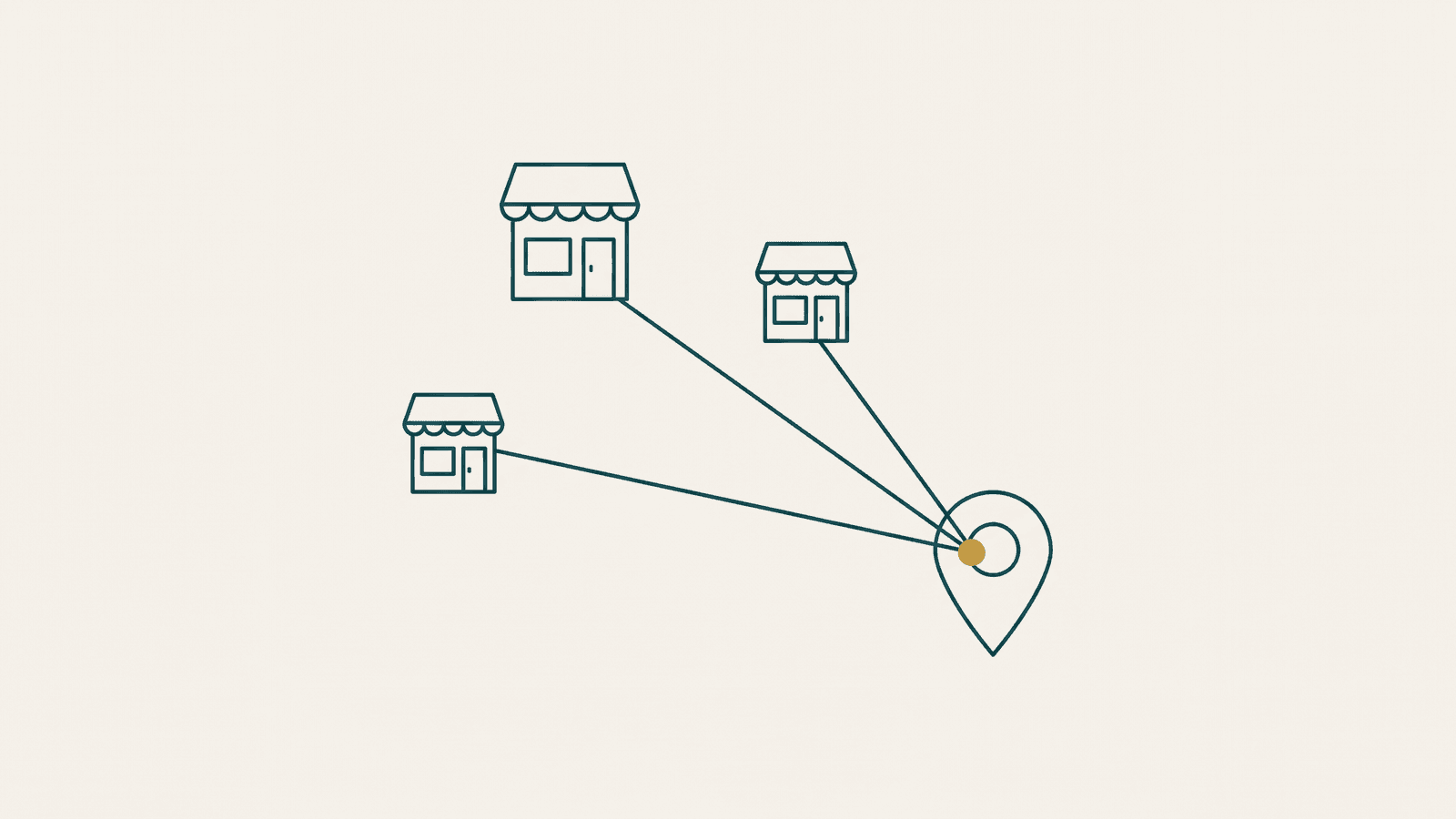
Imagine a café on Granby Street. The sign over the door says Bru. The Google Business Profile, set up in a hurry three years ago, says "Bru Coffee Leicester". Facebook says "BRU Coffee & Gelato" because that was the name on the day the page was made. Deliveroo has "Bru - Leicester City Centre". The website, which the owner’s nephew built, has "Bru Coffee" in the header and nothing in the code that says which of these it is.
To anyone who has walked past it, that is obviously one café. To a machine building a record of the businesses in Leicester, it can quite easily be three or four. Each one has a fragment of the picture: a handful of reviews here, a menu there, opening hours somewhere else. None of them is the full café. That is the problem this article is about, and the fix takes an afternoon.
Search engines think in things, not pages
For a long time, search worked on strings. You typed some words, it found pages containing those words. In 2012 Google announced a change of approach it called the Knowledge Graph, a model that understands real-world entities and their relationships to one another: "things, not strings". At launch it held more than 500 million objects and 3.5 billion facts about them. Your café is, or should be, one of those objects.
An entity, in this sense, is just a thing with a stable identity and a set of attributes. This café. Its name. Its address. Its phone number. Its hours. Its reviews. The knowledge panel you see on the right of a Google search, or the card on a map pin, is that record shown to a human. Google’s own help page says knowledge panels are created automatically when there is enough information available on the open web. Note the word enough. A record with too little attached to it does not get much of a panel at all.
AI assistants work the same way, only more so. When someone asks one "where’s good for coffee near the station", it is not reading your homepage and admiring the photos. It is pulling from whatever record it has of you, or of the places it thinks are you. The New Front Page Is an AI Answer covers why that matters. The short version: a system that has to guess whether "Bru" and "BRU Coffee & Gelato" are the same place tends to hedge, and hedging often means leaving you out.
Three people describing the same shop to a stranger
Here is the way to picture it. A stranger is standing on Gallowtree Gate asking three locals about a café. The first says, "Bru, the coffee place on Granby Street, great flat white." The second says, "BRU Coffee & Gelato, they do the pistachio one." The third says, "Bru Coffee Leicester, I think it’s on Granby, or maybe Halford Street, they used to have a different number."
A patient stranger might work out that all three mean the same place. A busy one, with fifty other cafés to consider, will not bother. They will file three half-descriptions, none of them confident, and recommend the café down the road that three people described the same way. Search engines and AI assistants are the busy stranger. They are not being difficult. They simply have no reason to merge records that do not clearly match, and every reason to trust the ones that do.
This is why the entity idea matters to a business with no marketing team. Nothing here requires understanding how the machine works inside. It requires giving it one name, one set of details and a few explicit links that say "these are all me".
How your website says "this is me"
Your own site is the one place on the web you fully control, so it is where the identity gets pinned down. The tool for that is structured data, the machine-readable layer explained in Machines Don’t Read Your Website. Three pieces of it do the entity work.
The first is the type. Schema.org defines LocalBusiness as "a particular physical business or branch of an organization", with a restaurant and a branch of a bank among its examples. Google’s documentation for LocalBusiness structured data lists name and address as the required properties, with telephone, url, opening hours and geographic coordinates recommended. That block on your site tells a machine, in plain terms, that this page is about a physical business with these exact details.
The second is an identifier. In JSON-LD, the format Google recommends for structured data, the @id keyword is used to uniquely identify the node being described. In practice you set it to a stable web address, usually your homepage with a fragment on the end, and use that same address anywhere else you describe the business. It is the entity’s serial number. A page can change; the @id stays put.
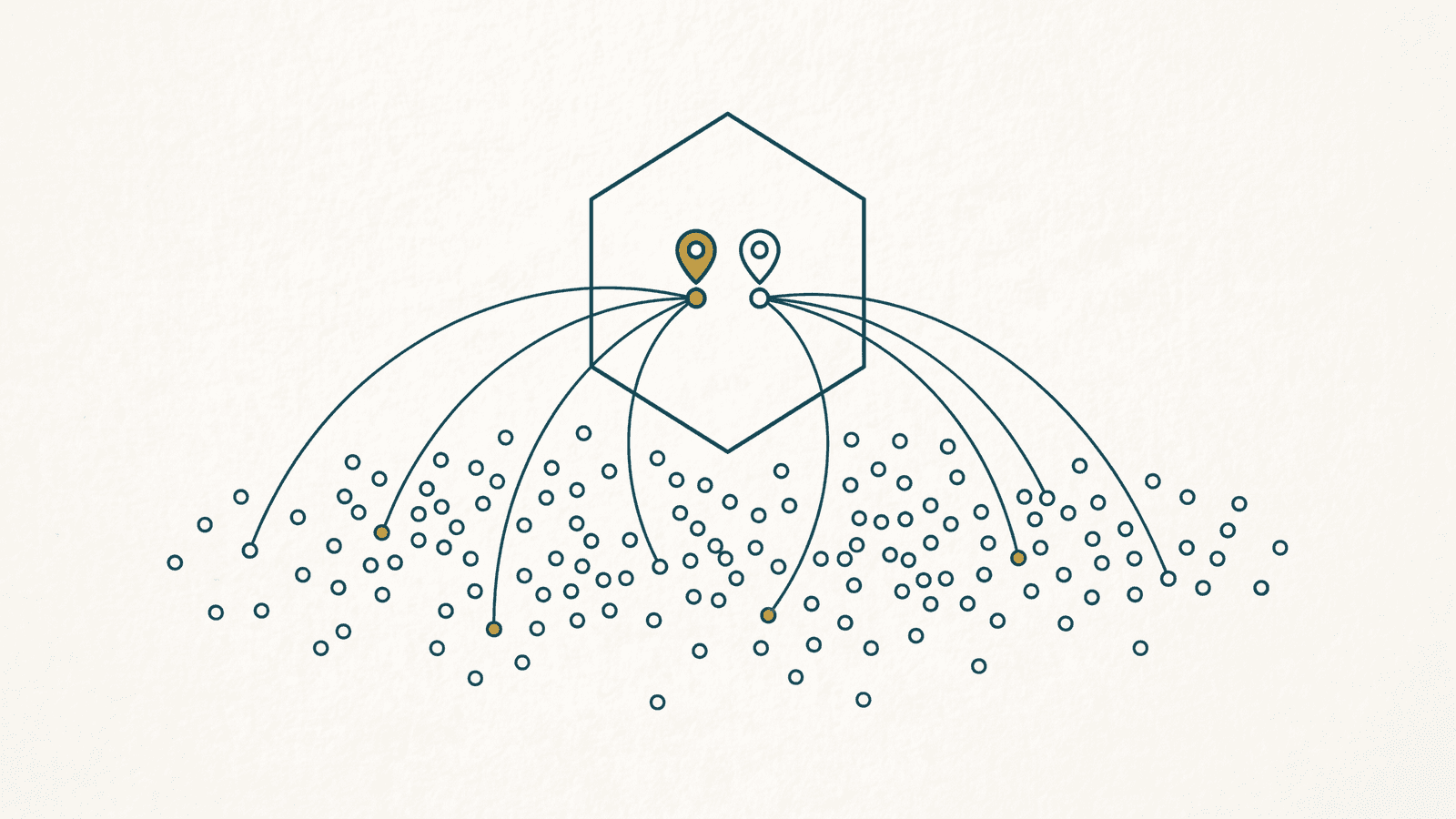
The third is sameAs. Schema.org defines it as the "URL of a reference Web page that unambiguously indicates the item’s identity", with the item’s official website or a Wikidata entry as examples. For a café, the unambiguous references are its Google Business Profile, its Facebook and Instagram pages, its Deliveroo page and its directory listings. Whitespark’s David Deering puts the effect plainly: by using sameAs in your markup, you tell search engines that the business you have marked up is the same one found at a certain citation URL. It is the explicit merge instruction the busy stranger was missing.
What the block on your site actually says
A LocalBusiness JSON-LD block is a short script in the page’s code that nobody sees. In plain words it reads: this is a LocalBusiness whose identifier is your own homepage address followed by #business; its name is Bru Coffee & Gelato; its address is 12 Granby Street, Leicester, LE1 1DE; its telephone is 0116 000 0000; its website is your homepage; it opens Monday to Saturday from eight until six; and it is the same as the following pages, followed by the full web addresses of your Google Business Profile, Facebook page, Instagram, Deliveroo page and directory listing. Ten lines, one time, and the name in it must match the sign exactly.
Consistency is the entity version of "same"
You may already know the rule that your name, address and phone number should be identical everywhere, down to "Street" versus "St." The Typo That’s Quietly Costing You Customers explains why. Seen through the entity lens, that rule stops being a fussy formatting habit and becomes the whole game. Matching details are how a machine decides two mentions belong to one record. Mismatched details are how it decides they do not.
The name is the part people get wrong most, because it feels like a branding choice rather than a data field. "Bru", "Bru Coffee" and "BRU Coffee & Gelato" are all reasonable things to call the same café. Pick one. The one on the sign, or the one on your Google profile if that has the most reviews, is usually the right answer. Then it is not a branding choice any more. It is the canonical name, and every other version is a typo.
Where reviews and mentions go
Here is the part that costs real money. Reviews, mentions in a local blog, a listing in a "best coffee in Leicester" roundup, a link from the neighbouring bookshop’s events page: each of these attaches to whichever record the machine matched it to. If the blog post calls you Bru and your Google profile says Bru Coffee Leicester, there is a fair chance the mention ends up on a stub, or nowhere. Forty Google reviews under one name and twenty Facebook recommendations under another are two mediocre reputations instead of one strong one.
The good news runs the same direction. Once the records merge, everything that was attached to the fragments belongs to the one entity. The café does not need more reviews; it needs the ones it already has counted in the same place. That is why identity is worth an afternoon before anything else.
An afternoon’s work
None of this requires an agency. In order:
- Pick the one canonical name, address format and phone number. Write them on a sticky note. That note is now the law.
- Open every place you exist online: Google Business Profile, Facebook, Instagram, Deliveroo or Just Eat, Apple Maps, Bing Places, every directory you can find by searching your own name in a private browser window. Make each one match the sticky note exactly. Delete or claim duplicates you forgot about.
- Add a LocalBusiness JSON-LD block to your website with the same details, an @id, and sameAs links to every profile you just fixed. If you or your web person cannot do this, a directory listing that publishes structured data under your canonical name does part of the job for you.
- Check the result. Google’s Rich Results Test and the Schema Markup Validator will both read the block back to you. If the name it reads back is not the one on the sign, you are not done.
Then leave it alone. The machines do not merge records overnight, and there is no button to press. What you have done is remove every reason for them to keep you split. Next time someone asks an assistant about coffee near the station, there is one café called Bru, with all its reviews in one place, and a clean record to read out.
Key takeaways
- Search engines and AI assistants keep a record per entity, not per page. A name written three ways can mean three thin records.
- LocalBusiness structured data with an @id and sameAs links is how your website says "these profiles are all me".
- Identical name, address and phone everywhere is the matching rule machines use to merge mentions into one record.
- Reviews and mentions attach to whichever record they match, so a merged entity keeps the reputation it already earned.
One identity, everywhere
Every Mavlo listing publishes LocalBusiness structured data under your one canonical name. Free to start.
Claim your free listing →Keep exploring

Browse the directory
Everything above, working in practice — real listings, in a real place.